Technology is moving beyond traditional computer screens.
Introduction
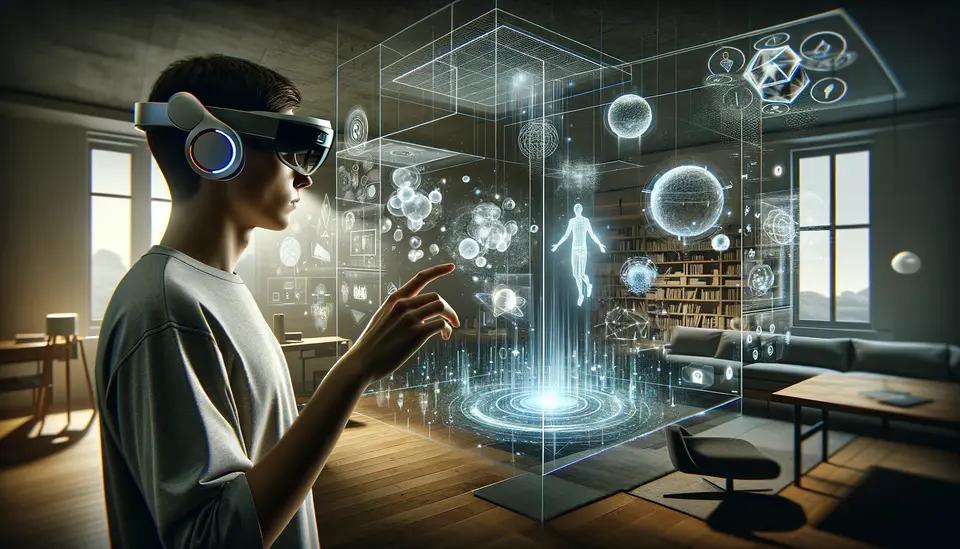
Instead of interacting with digital information through smartphones, laptops, and monitors, people are increasingly exploring ways to interact with digital objects directly within their physical surroundings.
This emerging technological approach is known as spatial computing. It combines digital environments with the real world, allowing users to interact with virtual objects through gestures, voice commands, eye movements, and physical movement.
From immersive learning environments to advanced industrial simulations, spatial computing is creating new possibilities for how people work, communicate, and experience technology.
What Is Spatial Computing?
Spatial computing is a technology that enables computers to understand and interact with physical spaces. It uses technologies such as augmented reality (AR), virtual reality (VR), artificial intelligence, sensors, and computer vision.
Unlike traditional computing, where information appears mainly on flat screens, spatial computing allows digital elements to exist within a user’s physical environment.
For example, imagine wearing smart glasses and seeing navigation directions appear directly on the road ahead, or viewing a three-dimensional furniture model inside your living room before purchasing it.
These are practical examples of spatial computing in action.
How Spatial Computing Is Changing Different Industries
1. Healthcare and Medical Training
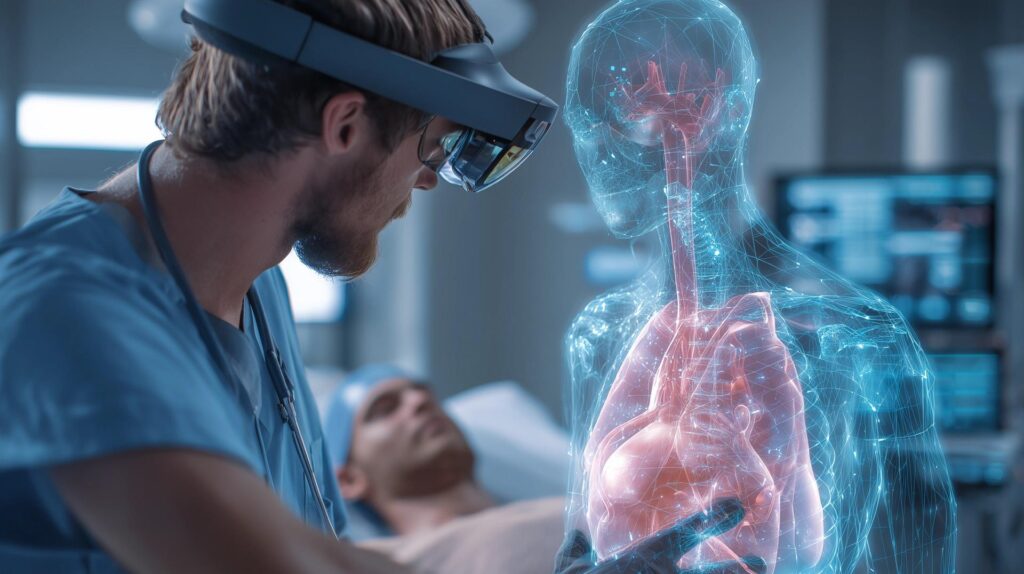
Medical professionals can use immersive 3D visualizations to understand human anatomy, study complex procedures, and practice certain surgical techniques in simulated environments.
2. Education and Learning
Students can explore historical locations, examine three-dimensional scientific models, and participate in interactive educational experiences instead of relying entirely on textbooks.
3. Architecture and Real Estate
Architects can present virtual building models to clients. Buyers can explore proposed interior designs and visualize furniture arrangements before construction or purchasing decisions.
4. Manufacturing and Industrial Operations
Engineers and technicians can use digital overlays to understand machinery, access instructions, and visualize complex equipment during maintenance procedures.
5. Gaming and Entertainment
Spatial computing is introducing more immersive entertainment experiences, allowing digital characters and environments to interact with physical surroundings.
Key Technologies Behind Spatial Computing
- Augmented Reality: Adds digital information to real-world surroundings.
- Virtual Reality: Creates completely simulated environments.
- Computer Vision: Helps computers interpret images and physical spaces.
- Artificial Intelligence: Supports intelligent interactions and contextual understanding.
- Sensors and Spatial Mapping: Help devices understand movement, position, and surroundings.
Challenges That Could Affect Its Growth
Despite its potential, spatial computing still faces several challenges.
High device costs, limited battery life, privacy concerns, hardware limitations, and the need for more practical applications could influence widespread adoption.
Developers also need to create experiences that are comfortable, accessible, and genuinely useful rather than simply visually impressive.
What Does the Future Hold?
As smart glasses, mixed-reality headsets, and spatial AI technologies continue developing, digital experiences may become more naturally integrated into everyday environments.
The future of computing may not depend entirely on looking at screens. Instead, people could interact with digital information in the spaces around them.
Conclusion
Spatial computing represents an important evolution in human-computer interaction. By connecting digital information with physical environments, it has the potential to transform industries ranging from healthcare and education to entertainment and engineering.
What once seemed like science fiction is gradually becoming a practical area of technological innovation.