The Central Board of Secondary Education (CBSE) has advised its affiliated schools to expand the use of digital payments across school-related services.
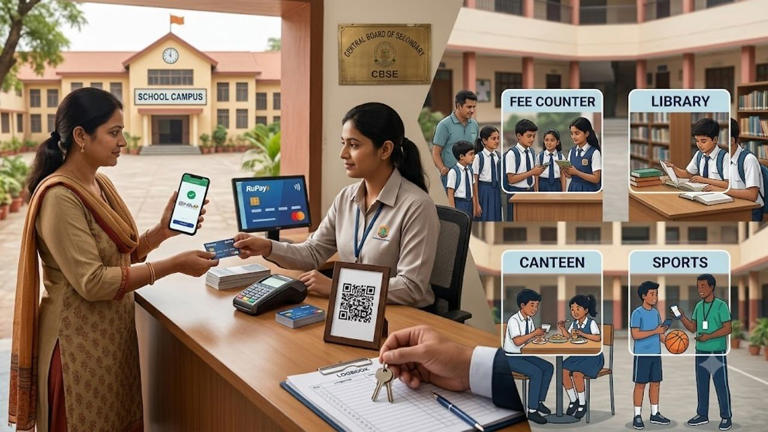
The initiative aims to make digital transactions more accessible for students, parents, teachers and school staff while encouraging safer digital payment practices. The advisory was issued through CBSE Circular No. 12/2026, dated September 30, 2026, following communication from the Department of Financial Services (DFS), Ministry of Finance. The circular was listed on CBSE’s website on October 1.
Digital Payments Across School Services
CBSE has advised schools to enable digital payment facilities at various payment touchpoints. These include:
- School fee payments
- Canteen payments
- Library-related payments
- Other school services
The suggested payment options include Unified Payments Interface (UPI) and RuPay cards. The objective is to make digital payment facilities available throughout the school ecosystem rather than limiting them to fee collection alone.
Options for Schools in Low-Connectivity Areas
The CBSE advisory also recognises that some schools may operate in areas where internet connectivity is limited.
For such locations, the Board has suggested considering alternative digital payment mechanisms such as:
- UPI Lite
- UPI LiteX
- UPI 123PAY
Schools may also conduct demonstrations and provide assisted payment support to help users become familiar with digital payment methods.
BBPS Suggested for Fee Collection
Another key recommendation is the use of the Bharat Bill Payment System (BBPS) for school fee collection.
According to the circular, schools may onboard BBPS to facilitate standardised, secure and interoperable fee payments. Schools may also integrate such systems with their ERP platforms to streamline recurring financial transactions, including staff salary payments.
This could help schools organise recurring payments through digital systems and provide parents with additional options for managing school-related payments.

Focus on Digital Financial Literacy
The CBSE initiative is not limited to installing digital payment facilities. The Board has also highlighted the importance of digital payment awareness and financial literacy.
Schools have been advised to consider:
- Including digital payment awareness in teacher-training programmes
- Conducting school-level awareness campaigns
- Promoting financial literacy modules that cover digital payments
- Organising awareness programmes for parents
- Providing guidance on safe and convenient digital transactions
Awareness activities may also be conducted during school events and parent-teacher interactions.
What It Means for Parents and Students
For parents, wider digital payment acceptance could provide additional ways to pay school fees and other school-related expenses.
Students may also become more familiar with digital financial tools as part of their broader financial literacy. At the same time, the emphasis on awareness and safe usage indicates that schools are being encouraged to accompany digital adoption with appropriate guidance.
A Wider Push Towards Digital Transactions
The CBSE advisory is linked to the Digital Payments Promotion Plan developed by the Department of Financial Services. The plan aims to expand access to digital payments, increase their usage and promote safer digital payment practices across the country.
The education ecosystem—including schools, students and parents—is included within this broader approach.
Conclusion
CBSE’s latest advisory encourages affiliated schools to make digital payments a more integrated part of everyday school operations. From fees and canteens to libraries and other services, schools have been advised to facilitate options such as UPI and RuPay.
Alongside payment infrastructure, the Board has also highlighted digital literacy, awareness and safe usage, indicating that the initiative covers both technology adoption and financial education.
The advisory provides schools with a framework for expanding digital payment access while considering the needs of users in areas with limited connectivity.