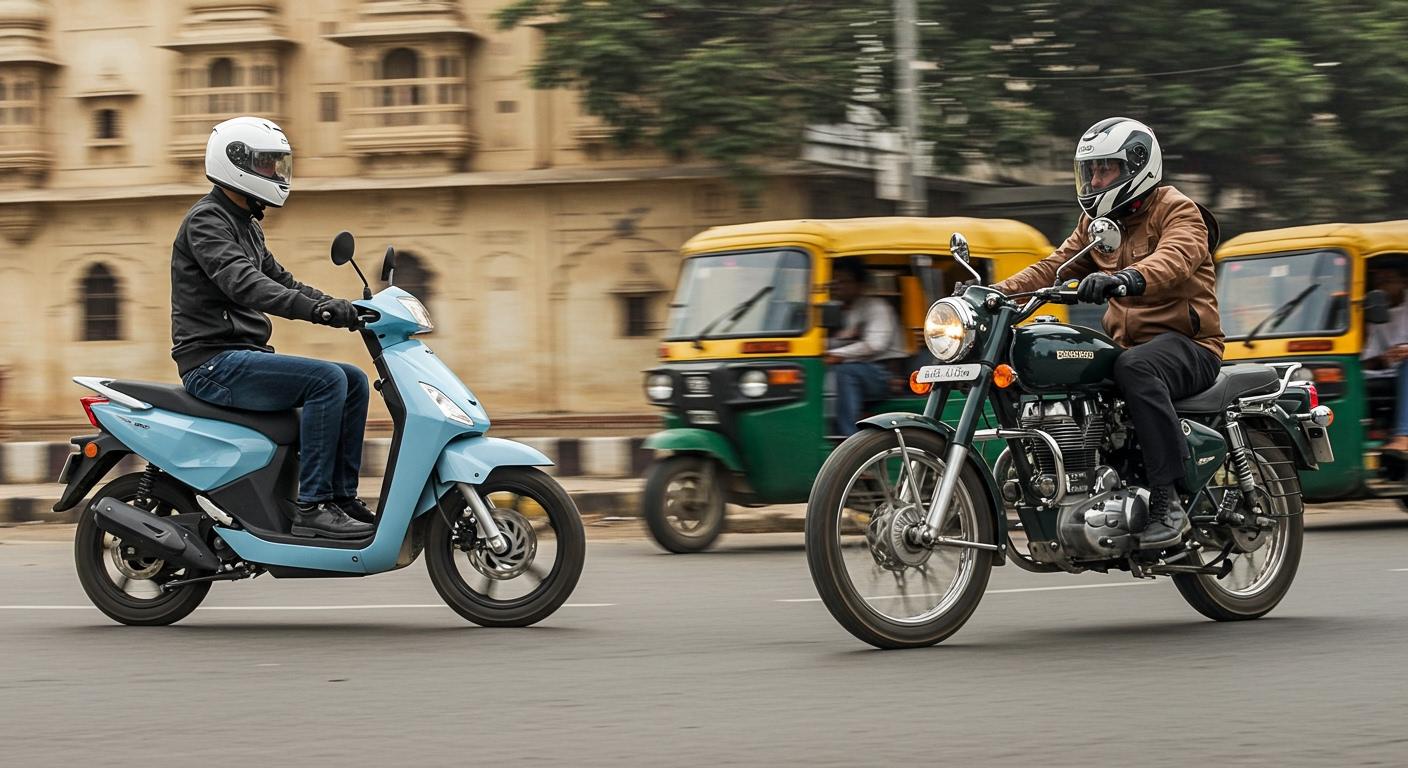
The Indian two-wheeler market is changing. Alongside familiar petrol-powered motorcycles and scooters, electric two-wheelers are becoming an increasingly visible option for daily commuting.
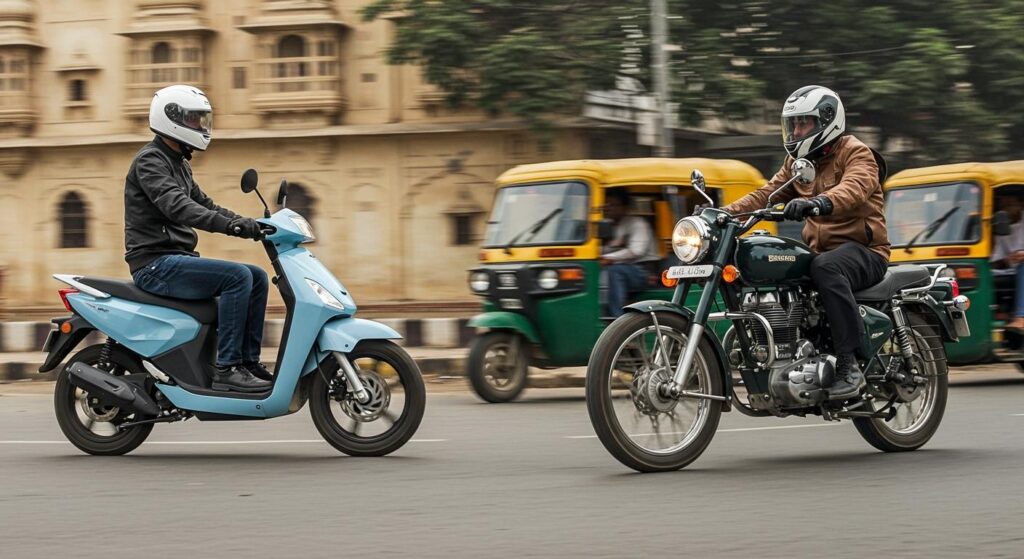
But which is the better choice? Electric bikes and scooters promise quieter rides and potentially lower running costs, while petrol vehicles offer established refuelling infrastructure and a wide range of models.
The answer depends on how you ride, where you travel and what matters most to you.
How Do Electric and Petrol Two-Wheelers Differ?

Electric two-wheelers
- Powered by a rechargeable battery and electric motor.
- Usually quieter, with no exhaust emissions while riding.
- Can cost less to operate per kilometre, depending on electricity tariffs and charging arrangements.
- Require access to convenient charging.

Petrol two-wheelers
- Powered by an internal combustion engine.
- Can be refuelled quickly at widely available petrol pumps.
- Offer extensive options across commuter, touring and performance categories.
- Require regular engine maintenance and petrol expenses.
4 Major Factors to Consider
1. Running costs
Electric two-wheelers may offer lower energy costs per kilometre. However, actual savings depend on purchase price, electricity rates, petrol prices, maintenance, battery life and how much you ride.
2. Charging versus refuelling
Petrol vehicles are convenient for long journeys because fuel stations are widely available. Electric vehicles work especially well when owners can charge at home or have reliable charging access along their routes.
3. Maintenance and battery life
Electric two-wheelers have fewer engine-related components and generally avoid oil changes. However, tyres, brakes, suspension, electronics and batteries still require attention. Battery replacement costs and warranty terms are important considerations.
4. Environmental impact
Electric vehicles produce no tailpipe emissions during use. Their overall environmental footprint also depends on electricity generation, battery manufacturing and battery recycling. Petrol vehicles release exhaust emissions while operating.
Which One Is Better for Daily Commuting?
| Your requirement | Option worth considering |
|---|---|
| Short daily city commutes | Electric two-wheeler |
| Home charging available | Electric two-wheeler |
| Frequent long-distance rides | Petrol two-wheeler, or an EV with suitable range and charging access |
| Quick refuelling and flexible travel | Petrol two-wheeler |
| Lower potential energy costs | Electric two-wheeler |
These are general guidelines, not universal rules. Model-specific range, service availability, purchase price and warranty should also influence the decision.
What Does the Future Look Like?
Battery improvements, smarter battery management, connected vehicle applications and expanding charging infrastructure could make electric two-wheelers more practical for a wider range of riders. Petrol motorcycles are also evolving through improved fuel efficiency, engine technology and digital instrument systems.
Conclusion
There is no single winner for every rider. Electric two-wheelers can make sense for predictable daily commutes, while petrol models remain practical for riders who prioritise quick refuelling and extensive travel flexibility.
The smartest purchase is not necessarily the newest technology—it’s the vehicle that best matches your budget, riding habits and everyday needs.