A heart attack can happen when blood flow to part of the heart muscle becomes severely reduced or blocked.

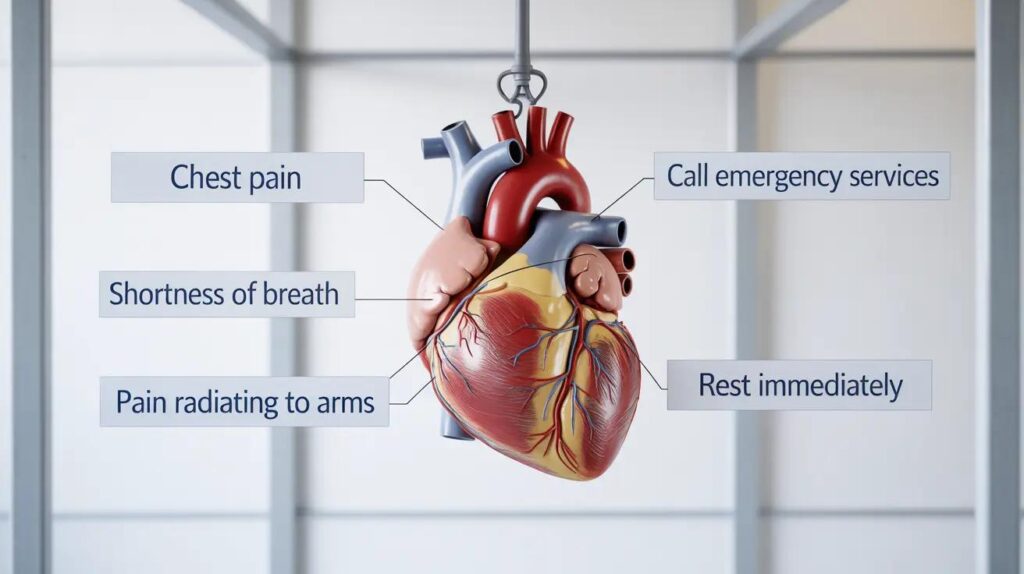
Recognizing the warning signs and seeking immediate medical attention can save a life. Although chest discomfort is the most widely recognized symptom, a heart attack does not always look the same in everyone.
Common Warning Signs of a Heart Attack
- Chest discomfort: Pressure, tightness, squeezing, fullness, or pain in the center of the chest.
- Shortness of breath: Difficulty breathing, with or without chest discomfort.
- Pain in other areas: Discomfort that spreads to one or both arms, the back, neck, jaw, or stomach.
- Cold sweating: Sudden sweating without an obvious reason.
- Nausea or dizziness: Feeling sick, lightheaded, or unusually weak.
- Unusual fatigue: Unexpected or extreme tiredness, which can sometimes occur before a heart attack.
Women can also experience chest discomfort, but may be more likely to report symptoms such as shortness of breath, nausea, back or jaw pain, and unusual fatigue.
What Should You Do During a Suspected Heart Attack?
- Call 112 in India or your local emergency number immediately.
- Stop physical activity and sit down in a comfortable position while waiting for help.
- Do not drive yourself to the hospital.
- Follow the emergency dispatcher’s instructions. Do not delay seeking help to try home remedies.
Important: Do not wait for all symptoms to appear. Even if you are unsure whether it is a heart attack, seek emergency medical help if you suspect one.

How Can You Reduce Your Risk?
- Eat a balanced diet with less excess salt and saturated fat.
- Exercise regularly according to your health and fitness level.
- Avoid smoking and tobacco.
- Monitor blood pressure, cholesterol, and blood sugar.
- Take prescribed medicines as directed and attend recommended checkups.
Conclusion
Knowing the warning signs of a heart attack can make a critical difference. Prevention through healthy habits and prompt action during an emergency are both essential. Never ignore possible heart attack symptoms or wait for them to disappear on their own.